
You’ve seen it on your street. A perfectly healthy tree reduced to a cluster of thick, ugly stumps. No canopy. No natural shape. Just brutally shortened branches pointing at the sky like broken fingers.
Most homeowners assume this is a normal, even responsible, way to manage a large tree. After all, it looks “cleaned up.” The tradesperson seemed confident. The price was reasonable.
But here is what you were not told. That tree is now severely stressed, structurally weakened, and statistically likely to become a hazard within a few years. The money you spent did not protect your property. In many cases, it created a far more expensive and dangerous problem than the one you started with.
The good news is there is a better way, and understanding the difference could save your tree, your money, and potentially someone’s safety.
- Why Tree Lopping Is Unacceptable
- The Biological Damage Tree Lopping Causes
- The Hidden Safety Risks Nobody Warns You About
- Is Tree Lopping Illegal?
- Tree Lopping vs. Proper Pruning: The Real Difference
- What Arborists Recommend Instead
- How to Find a Qualified Tree Care Professional
- Conclusion
- Frequently Asked Questions
TL;DR: What Is Tree Lopping?
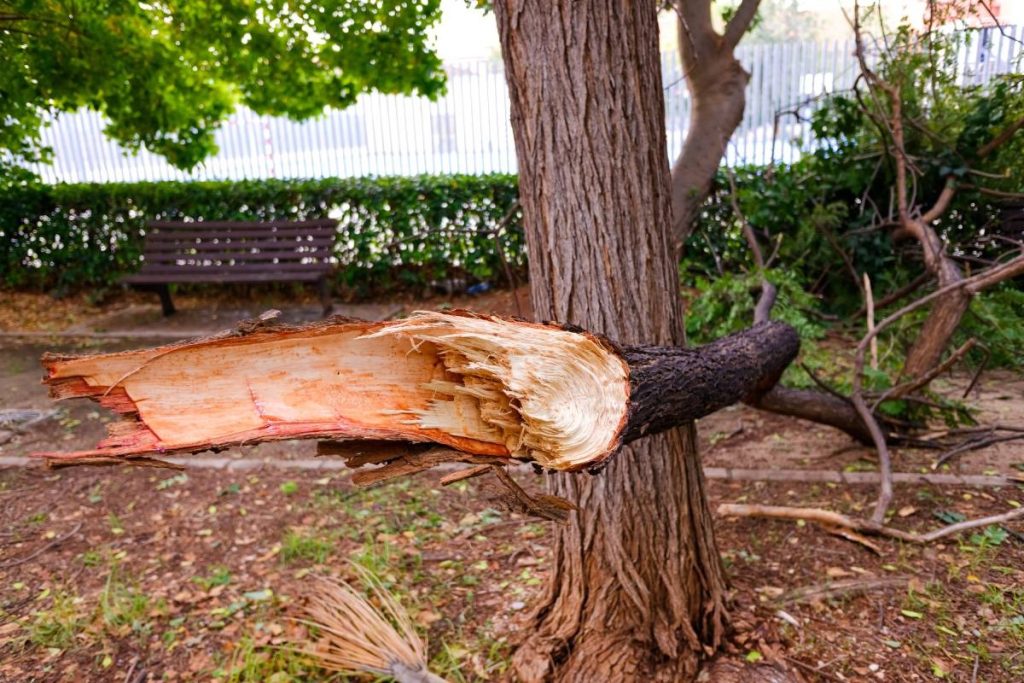
Tree lopping is the indiscriminate cutting of large branches or tree trunks to reduce height or spread without following correct pruning standards. It leaves oversized stubs, ignores natural branch architecture, and causes lasting biological damage. Arborists and organisations like the ISA universally classify it as an unacceptable practice.
Why Tree Lopping Is Unacceptable
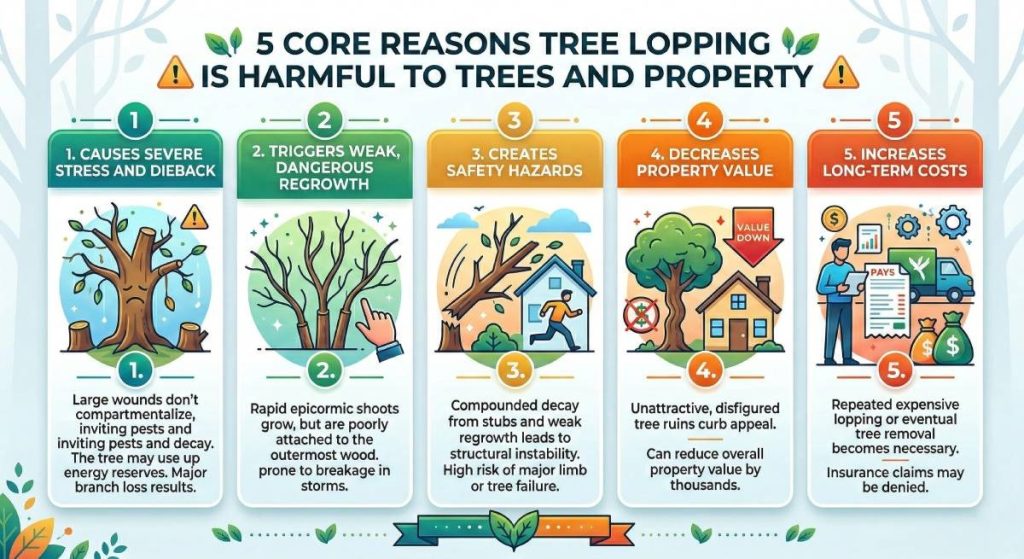
The International Society of Arboriculture (ISA) and arboricultural standards bodies across the world are unambiguous on this point. Tree lopping is not a legitimate tree care practice. It is considered harmful, and in many local jurisdictions, it is regulated or outright prohibited.
Here are the core reasons why:
1. It creates wounds the tree cannot heal
When a branch is cut at a random point along its stem, the tree has no biological mechanism to close that wound properly. The result is permanent open tissue that invites decay.
2. It destroys the tree’s energy-producing capacity
Leaves are how a tree produces food through photosynthesis. Removing the majority of a tree’s canopy in one event sends it into a state of acute stress, forcing it to burn stored energy reserves just to survive.
3. It triggers weak, dangerous regrowth
In response to lopping, trees produce rapid epicormic shoots. These grow at an alarming rate but are attached weakly to the outer wood layers, making them highly prone to failure during storms.
4. It dramatically shortens the tree’s lifespan
Trees that are repeatedly lopped rarely recover to a healthy state. Decay sets in, structural integrity is lost, and what was once a valuable, long-lived tree becomes a liability within a decade.
5. It increases your long-term costs
A lopped tree will need repeated intervention as the weak regrowth creates ongoing hazards. Many lopped trees eventually require full removal, which is significantly more expensive than proper pruning would ever have been.
The Biological Damage Tree Lopping Causes
To understand why tree lopping is so destructive, you need to understand a core principle of tree biology: trees do not heal wounds the way humans do.
Human skin regenerates. Tree wood does not. Instead, trees practice a process called wound compartmentalisation, where they chemically wall off damaged tissue to prevent decay from spreading. This system works effectively at natural branch unions because the tree’s anatomy is designed for it.
When a lopping cut is made mid-branch, there is no collar tissue present. The tree cannot wall off the wound. Decay-causing fungi and bacteria enter freely, moving into the heartwood of the trunk itself over time.
The result is a process called internal column decay, which is invisible from the outside but devastating to structural integrity. A tree can look alive and even produce new growth while being hollow and dangerous at its core.
What happens biologically, step by step:
- Large stub cuts are made with no collar tissue present
- The tree initiates epicormic (emergency) shoot production
- Epicormic shoots grow rapidly from latent buds just under the bark
- These shoots are only anchored in surface wood, not structural wood
- Wounds fail to compartmentalise, and fungal decay begins
- Internal column decay progresses, often invisibly
- The tree’s structural integrity is compromised at the points of previous cuts
- Failure of large stems or the entire tree becomes increasingly likely
This is not a slow or theoretical risk. Studies published in arboricultural science journals consistently show that lopped trees show measurable internal decay within two to three years of the initial cuts.
The Hidden Safety Risks Nobody Warns You About
Tree lopping is frequently sold as a safety measure. “We’ll cut it back so it doesn’t fall on your house.” This framing is one of the most damaging misconceptions in residential tree care.
The reality is the opposite. Tree lopping creates the very hazards it claims to prevent.
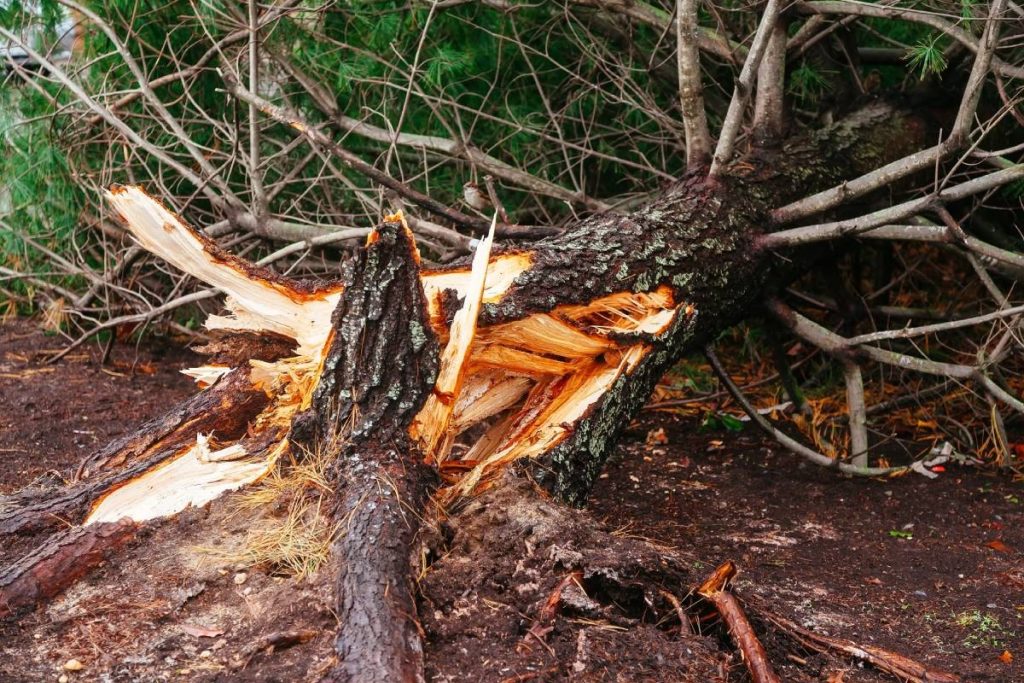
Consider the physics. A healthy, well-structured tree with a full canopy flexes in wind. The distributed weight of the canopy, spread across strong, tapered branches with proper attachments, allows the tree to absorb wind load efficiently.
A lopped tree has none of this. What it has instead is:
- Multiple large, flat wound surfaces that collect water and accelerate decay
- Clusters of epicormic shoots that are heavy, numerous, and weakly attached
- Compromised internal wood that cannot be assessed visually
- Reduced root anchorage because root systems decline in proportion to canopy loss
After a storm, arborists and emergency services consistently report that the trees that fail are not the unpruned ones. They are the lopped ones. The failure points are almost always at or near previous lopping cuts, where epicormic growth has snapped off or where internal decay has hollowed out the structural wood.
Your insurance position may also be affected. If an arborist’s report identifies a tree as having been damaged through lopping, and that tree subsequently causes property damage, your insurer may dispute the claim on the grounds that the hazard was created, not prevented.
Is Tree Lopping Illegal?
This is one of the most searched questions in this topic area, and the answer varies depending on your location. However, the regulatory trend globally is firmly against lopping.
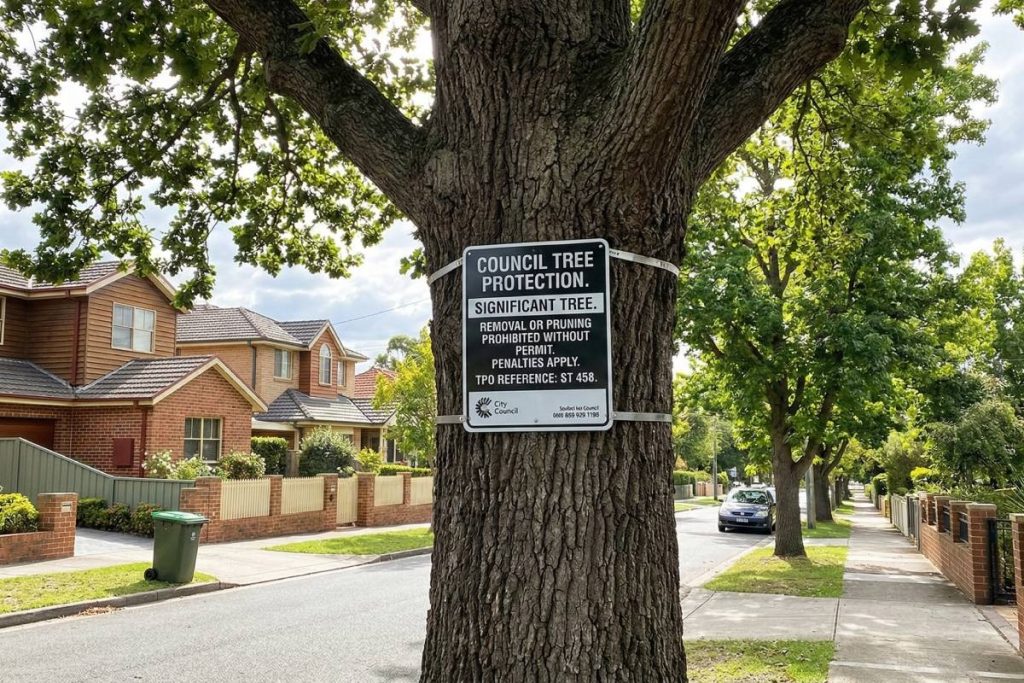
In Australia, the majority of local councils regulate significant tree work through Tree Preservation Orders (TPOs) and Development Control Plans. Many councils explicitly prohibit lopping of protected trees and require any significant pruning to comply with Australian Standard AS 4373: Pruning of Amenity Trees, which classifies lopping as an unacceptable pruning method.
In the United Kingdom, trees protected by Tree Preservation Orders cannot be lopped without explicit written consent from the local planning authority. Violations carry significant fines.
In the United States, many municipalities and HOAs have adopted ISA pruning standards into their local ordinances, with some states treating the deliberate destruction of a tree’s health through improper pruning as damage to property.
Key legal considerations:
| Jurisdiction | Regulatory Framework | Penalty for Violations |
| Australia (most states) | AS 4373 + Local Council TPOs | Fines up to $1.1M (NSW) |
| United Kingdom | Tree Preservation Order system | Unlimited fines + prosecution |
| United States (varies) | Local ordinances + HOA rules | Fines and remediation orders |
| New Zealand | Resource Management Act | Fines up to $300,000 |
Even where lopping is not explicitly illegal, performing it on a protected tree without consent can result in enforcement action, mandatory remediation, and civil liability if the tree subsequently causes damage.
Tree Lopping vs. Proper Pruning: The Real Difference
Understanding this distinction is the single most important thing a homeowner can take away from this article. Tree lopping and proper pruning are not variations of the same thing. They are fundamentally different practices with completely different outcomes.
| Factor | Tree Lopping | Proper Pruning / Crown Reduction |
| Cut placement | Random, mid-branch | At natural branch unions or collars |
| Wound closure | Cannot occur | Facilitated by collar tissue |
| Canopy removed | Often 50% or more | Maximum 25% in any single season |
| Regrowth type | Weak epicormic shoots | Strong, structurally sound growth |
| Decay risk | Very high | Minimal when done correctly |
| Tree lifespan impact | Dramatically shortened | Neutral to positive |
| ISA / AS 4373 compliant | No | Yes |
| Long-term cost | High (repeated work + removal) | Lower (less frequent intervention) |
| Aesthetic outcome | Disfigured, unnatural | Natural form retained |
| Safety outcome | Increased hazard | Reduced hazard |
Proper pruning follows the tree’s natural architecture. Cuts are made at specific anatomical points where the tree’s own defence systems can respond. The goal is never just to make the tree smaller. The goal is to achieve a specific outcome, whether that is clearance from structures, improved light penetration, or removal of dead and hazardous material, while preserving the tree’s long-term health and structural integrity.
What Arborists Recommend Instead
A qualified arborist, particularly one certified by the ISA or a national equivalent, will never recommend lopping. The alternatives they use achieve the same practical goals without the biological destruction.
Crown Reduction
This is the most commonly misunderstood alternative. Crown reduction reduces the overall height and spread of a tree by cutting back to suitable secondary branches that can take over as the new growing tips. The natural form of the tree is maintained. No large stubs are left. The canopy is smaller but biologically functional.
Selective Pruning
For trees that have grown too close to structures or powerlines, selective pruning removes specific branches that are causing the problem while leaving the rest of the canopy intact. This is a target, precise, and leaves the tree’s health uncompromised.
Deadwooding
Removing dead, dying, or diseased branches is one of the most beneficial things you can do for a tree. It reduces the risk of branch failure, improves the tree’s appearance, and removes entry points for pests and pathogens. It involves no live wood removal beyond what is necessary.
Crown Lifting
If clearance beneath the tree is the concern, crown lifting removes the lower branches to a specified height. This provides clearance for vehicles, pedestrians, or buildings without touching the upper canopy structure at all.
Structural Pruning (Young Trees)
For younger trees, structural pruning establishes a strong branch architecture early in the tree’s life, significantly reducing the need for corrective work later. This is where investment in qualified tree care pays the greatest long-term dividend.
How to Find a Qualified Tree Care Professional
The single most effective thing you can do to protect your trees is to hire the right person from the start. The tree care industry, unfortunately, has a low barrier to entry. Anyone with a chainsaw and a truck can advertise as a “tree surgeon.”
What to look for:
- ISA Certified Arborist credential or national equivalent (in Australia, the gold standard is a Level 5 Arborist holding an AQF Diploma of Arboriculture, which represents advanced training in tree risk assessment, tree biology, and technical pruning practices well beyond the minimum entry-level requirement)
- Compliance with AS 4373 (Australia) or relevant national pruning standard
- Current public liability and workers compensation insurance (request certificates, not just verbal confirmation)
- No door-to-door soliciting – qualified arborists rarely cold-call homeowners after storms offering cheap work
- Written quote that specifies the work type – if it says “lop” or “top,” walk away
- Willingness to explain their methodology – a real arborist will explain why they are making each cut
Red flags that indicate an unqualified operator:
- Offers to do the work immediately for a suspiciously low price
- Cannot name the pruning standard they work to
- Uses the word “lopping” as if it is a standard service
- Cannot provide proof of insurance
- Suggests removing more than 25% of the canopy in one visit without a structural justification
- Leaves large stubs and calls the job complete
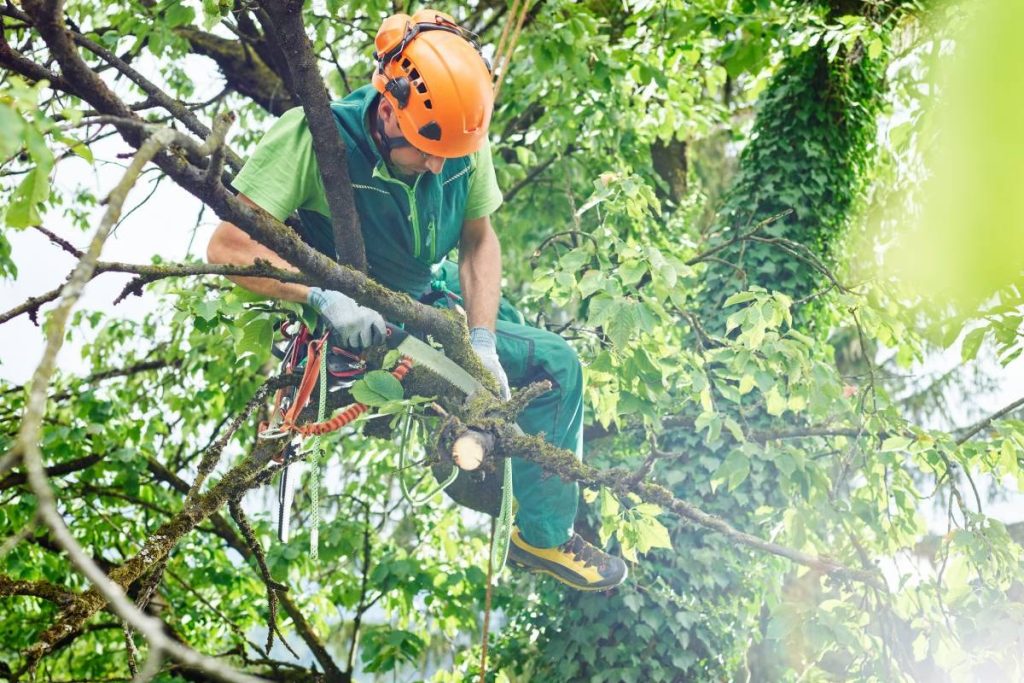
A qualified arborist will conduct a thorough assessment before recommending any work. They will explain what they are proposing, why it is appropriate for that specific tree, and what the expected outcome will be. That conversation, before the chainsaw starts, is the clearest sign you are dealing with a professional. Companies like Wiktora Bros Tree Works represent the standard to look for professionals who lead with assessment, operate to recognised pruning standards, and prioritise the long-term health of your trees over quick, destructive shortcuts.
Conclusion
Tree lopping is not a shortcut to tree management. It is a path to tree destruction, increased safety risk, and potential legal and financial liability. The science is unambiguous, the regulatory frameworks are increasingly strict, and the professional arboricultural community is unified in its rejection of the practice.
The key takeaways from this article:
- Tree lopping causes wounds trees cannot properly close, leading to internal decay
- It creates weak epicormic regrowth that is far more dangerous than the original canopy
- It can be illegal under local council regulations and national tree protection legislation
- Proper alternatives like crown reduction, selective pruning, and deadwooding achieve the same practical goals without the biological damage
Your trees are long-term assets. A healthy, well-maintained mature tree adds measurable value to your property, provides shade, habitat, and environmental benefit, and can outlive the buildings around it by centuries when properly cared for.